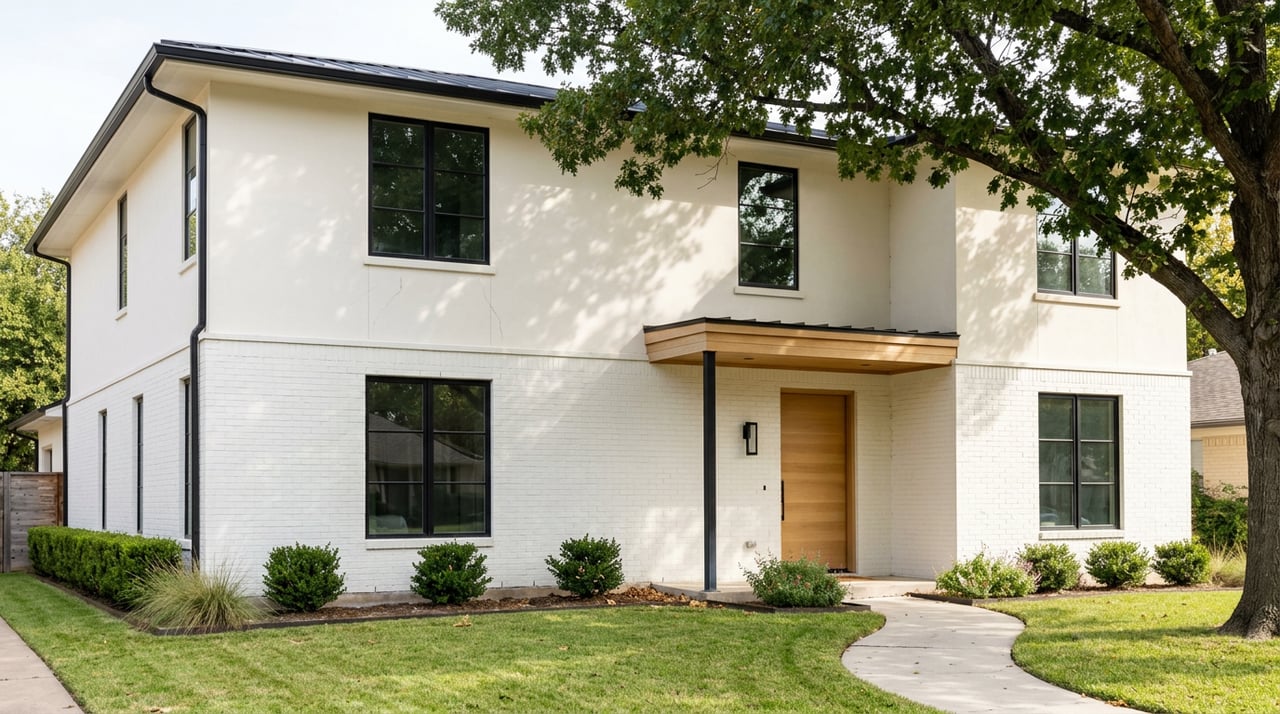
Drive through the interior of Midway Hollow on a weekday afternoon and you will not pass a single shop, restaurant, or corner store. Just brick ranch houses and two-story rebuilds, tree canopy, driveways, the occasional dog walker. The commerce this neighborhood runs on is not missing. It is simply not there, and it never has been.
That absence is not an accident of underdevelopment. It is the original plan, still intact eight decades later, and it explains something residents feel but rarely name: why every favorite restaurant in Midway Hollow technically belongs to somewhere else.
A Neighborhood Platted Without a Storefront
Midway Hollow's boundaries have not moved since they were first drawn: Walnut Hill Lane to the north, Northwest Highway to the south, Midway Road to the east, Marsh Lane to the west, all wrapped around a patch of northwest Dallas just north of Love Field. Even the street names inside that rectangle predate the neighborhood itself. Marsh Lane, one of the boundary streets, and interior streets like Lively Lane and Coppedge Lane, all carry the names of families who farmed this land under an 1841 Peters Colony land grant, more than a century before Midway Hollow existed as a neighborhood, according to the neighborhood's own Wikipedia entry.
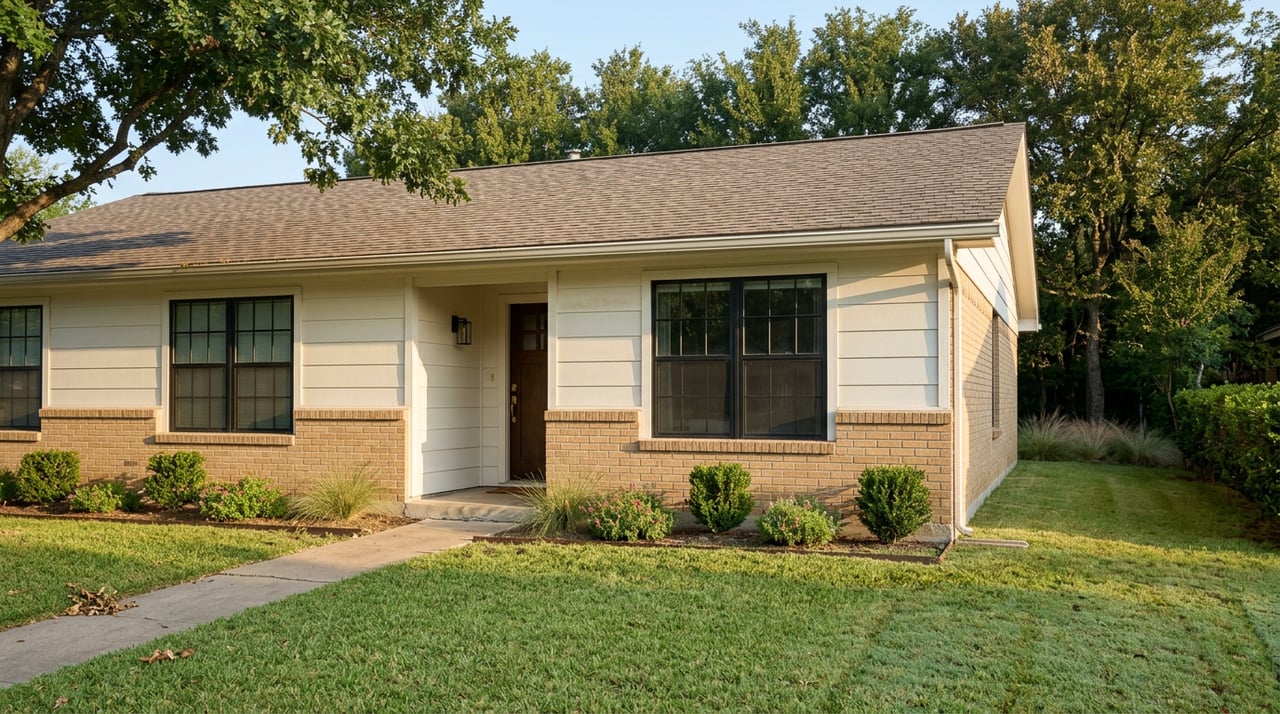
Inside that roughly one-square-mile rectangle, the neighborhood was built for one purpose only. In 1945, Dallas oilman Clint Murchison Sr. put up one of the area's first housing tracts at Northwest Highway and Marsh Lane, fifty single-family bungalows built with insulated concrete, an unusual material choice at the time. A young Ebby Halliday, decades before she became one of the most recognized names in Dallas real estate, staged and sold every one of those houses. Priced between $7,000 and $9,000, something like $95,000 to $122,000 in today's dollars, all fifty sold within a year.
The tract's success set the template for everything built around it through the 1950s. What it did not include, then or later, was a commercial corridor. Zoning inside Midway Hollow stayed strictly single-family, no apartment buildings, no storefronts, with any commercial use pushed to the major intersections at the neighborhood's own edges. That single decision, made when the first fifty bungalows went up, is the reason the interior still reads as pure residential grid eighty years later.
The Same Boundary Line, Eighty Years Later
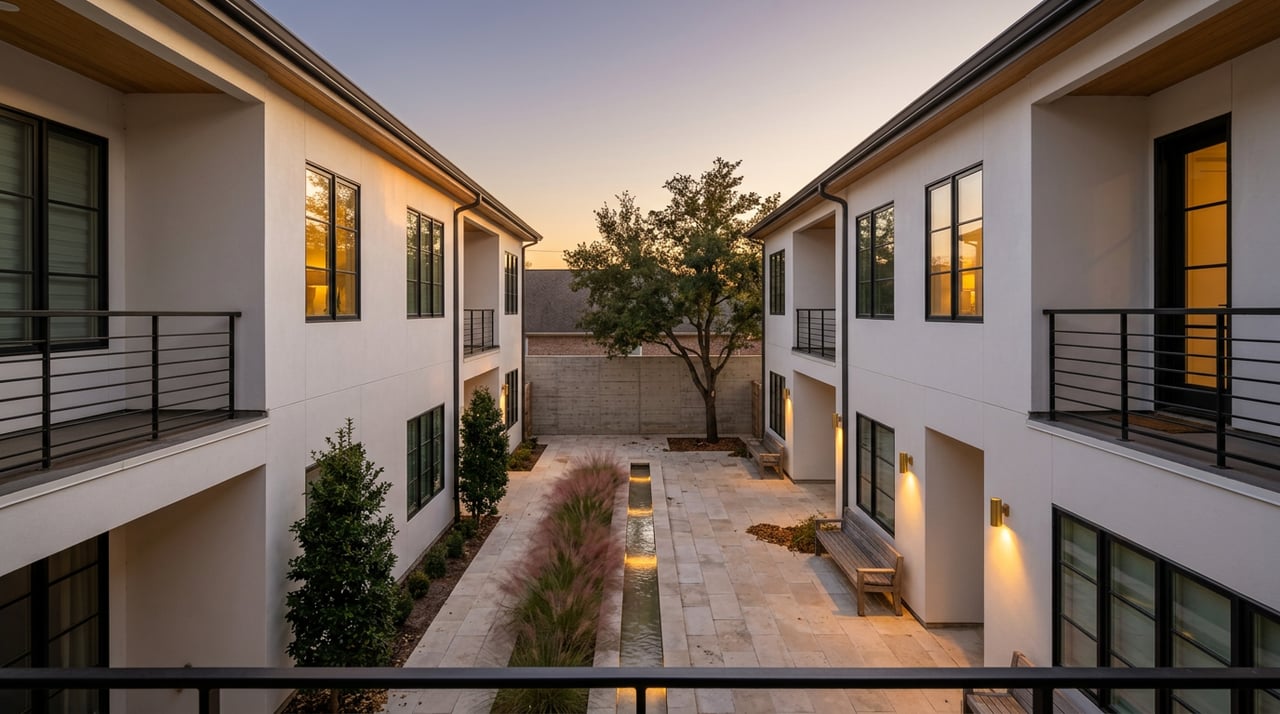
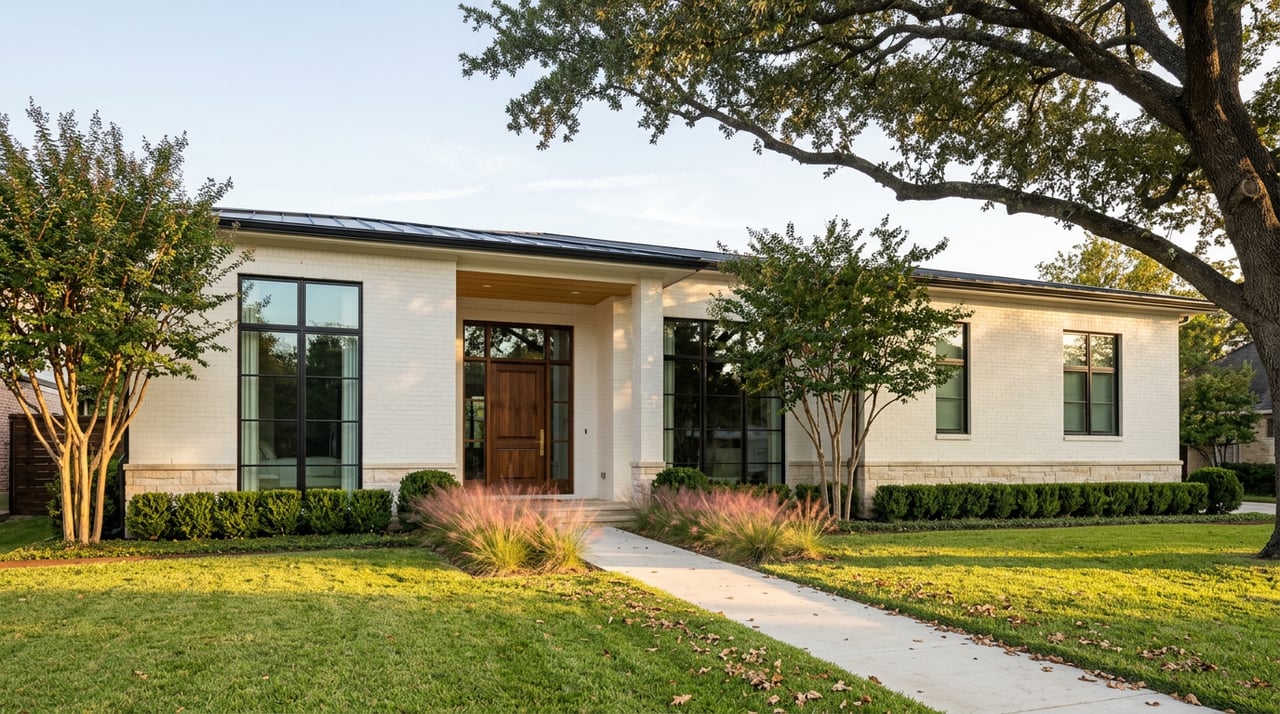
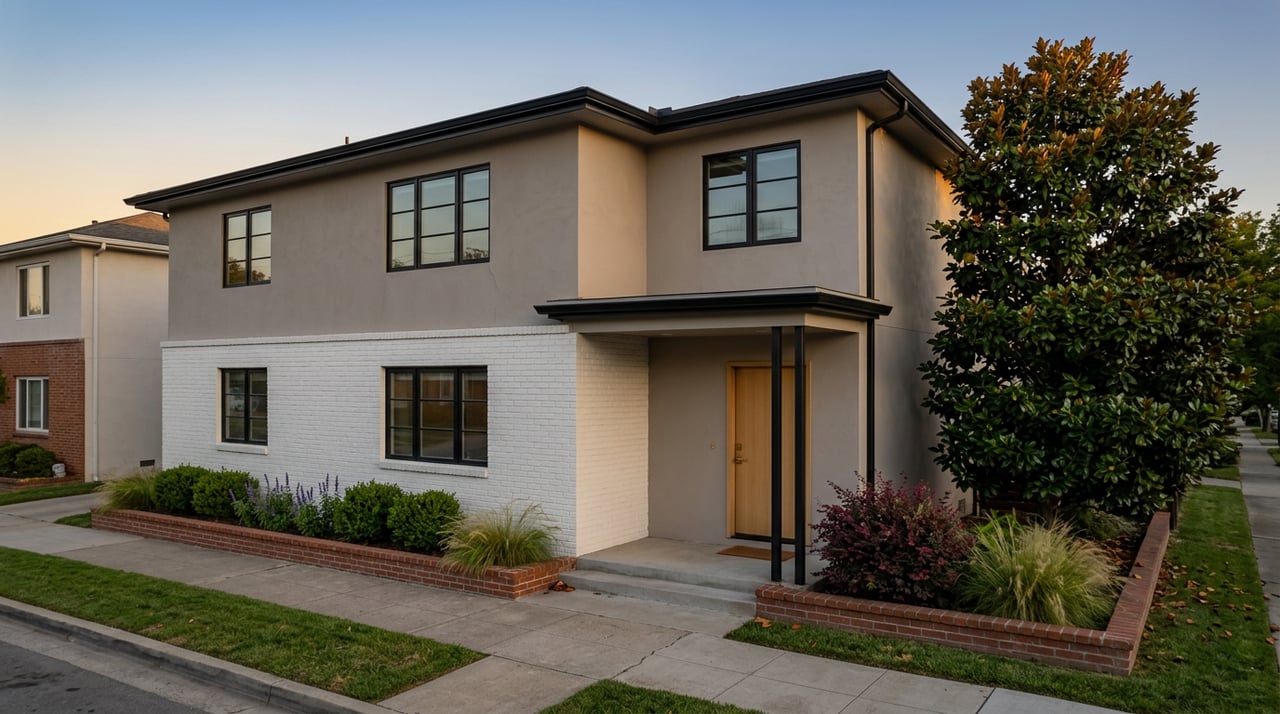
The houses have changed more than the map has. In the early 2000s, Midway Hollow started drawing attention as an affordable alternative to Preston Hollow next door, and buyers who wanted the location without the price tag started arriving. Investors and small builders followed, buying up the original one-story bungalows to replace them with larger two-story houses. By the 2010s, teardown construction was routine enough that in 2007 the preservation group Preservation Dallas had already placed the neighborhood on its list of Dallas's Most Endangered Historic Places, citing the pace at which original 1950s homes were being lost.
None of that turnover touched the zoning that keeps commerce off the interior streets. The neighborhood holds roughly 2,600 single-family homes and an estimated 5,800 residents as of 2023, nearly all of them on blocks with no business address at all. A neighborhood this size, this close to the center of Dallas, with zero interior storefronts eighty years running, is unusual enough to notice rather than assume.
Every Resident's Favorite Restaurant Technically Belongs to Someone Else
Because the interior was never zoned for it, everything residents actually eat, shop, or drink at sits on the boundary lines or just past them. The clearest example is the corner of Northwest Highway and Midway Road, Midway Hollow's own southeast corner. Central Market opened its third Dallas location there in 2018, in a building that used to be an Albertsons, according to CultureMap's coverage of the store's arrival. The remodel that came with the new store pushed out a smaller neighbor: the space had been home to Suze, which had to relocate a few doors down inside the same shopping center to make room. Suze is still there today, serving the same Mediterranean menu it always has. Neither business sits inside Midway Hollow's own boundary lines. Both function as if they do, because that intersection is the closest thing the neighborhood has to a front door.
The pattern holds up on the neighborhood's Nextdoor page, where residents talk about their regular spots the way people talk about restaurants they consider their own. One longtime regular summed up years of loyalty to a favorite red-sauce order this way: "I've tried to find sausage lasagna that is better than this and it's just not out there." Others in the same threads circle back to Dream Cafe for weekend patio brunch and to Casa Navarro, the kind of devotion that builds up over years of the same order at the same table rather than a single good visit. None of these places sit on a residential street inside Midway Hollow's own lines. All of them function as the neighborhood's unofficial dining room.
Even the walking routes follow the same logic. Midway Hollow's own streets are for dog walks and stroller loops under mature trees, and residents commonly cross Midway Road on foot into the hills of adjoining Old Preston Hollow for a longer route, since the interior offers plenty of shade but nowhere in particular to walk toward. Bachman Lake and the Frontiers of Flight Museum, both a short drive away given the neighborhood's position just north of Love Field, round out the short list of places residents treat as their own without technically living near them.
Where the Interior Ends and the Errands Begin
A short list of what actually anchors daily life here, none of it technically inside the residential grid:
- Central Market, at Northwest Highway and Midway Road. The grocery run that doubles as the neighborhood's main errand, open on that corner since 2018.
- Suze. The Mediterranean spot a few doors down in the same shopping center, relocated once already to make room for Central Market's expansion.
- Roman Cucina, Dream Cafe, and Casa Navarro. Three sit-down regulars residents name by name on neighborhood message boards, none of them on a street with a house number inside the boundary lines.
- Bachman Lake and the Frontiers of Flight Museum. The closest open-air and cultural options, both a short drive given the neighborhood's proximity to Love Field.
The Quiet Middle Is the Point
None of this reads as a complaint from residents. It is the trade the original 1945 plan made on their behalf: keep the interior purely residential, push every storefront to the edges, and let the boundary streets do the work a Main Street would normally do elsewhere. Eighty years of teardowns, rebuilds, and one preservationist warning later, that trade still holds. The houses inside the rectangle have gotten larger and newer. The rectangle itself has never once had a business address inside it.
That is worth knowing if you already live here, if only because it explains a feeling most residents have had without quite naming it: the sense that your favorite table, your grocery run, and your regular walk all happen just past your own street, at the same handful of intersections everyone else in the neighborhood also ends up at. That is not a coincidence. It is the floor plan the neighborhood has followed since Ebby Halliday sold the first fifty houses in under a year.
If you are weighing what a property on one of these interior streets, or a small project along the periphery, is actually worth in a neighborhood built this way, Lardner Group works Midway Hollow and the surrounding North Dallas corridor regularly. Schedule a consultation and we will walk you through what the zoning history means for your specific address.