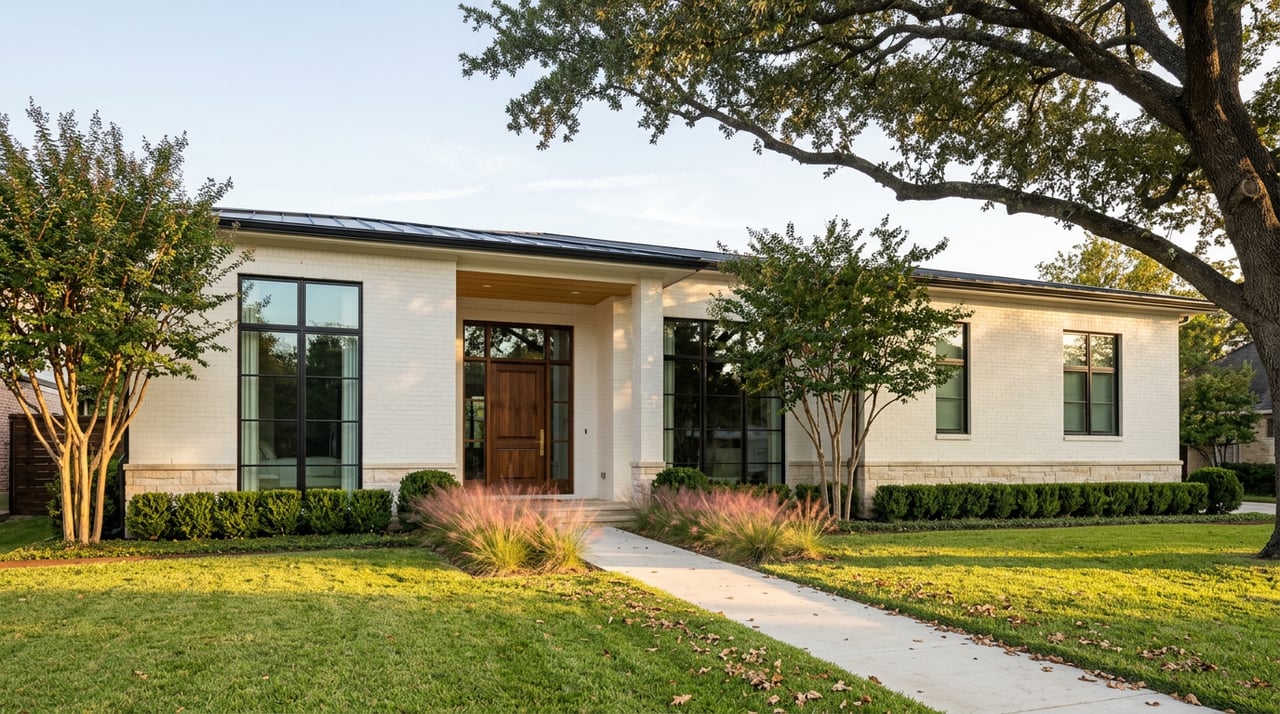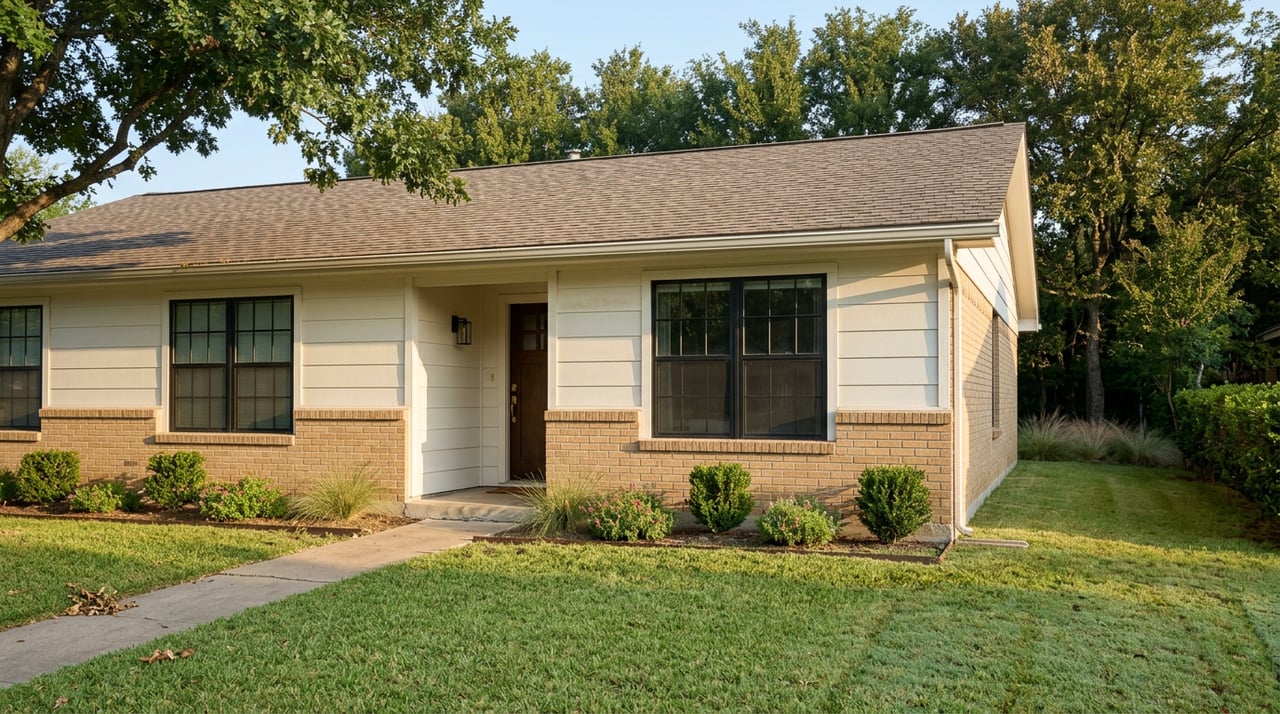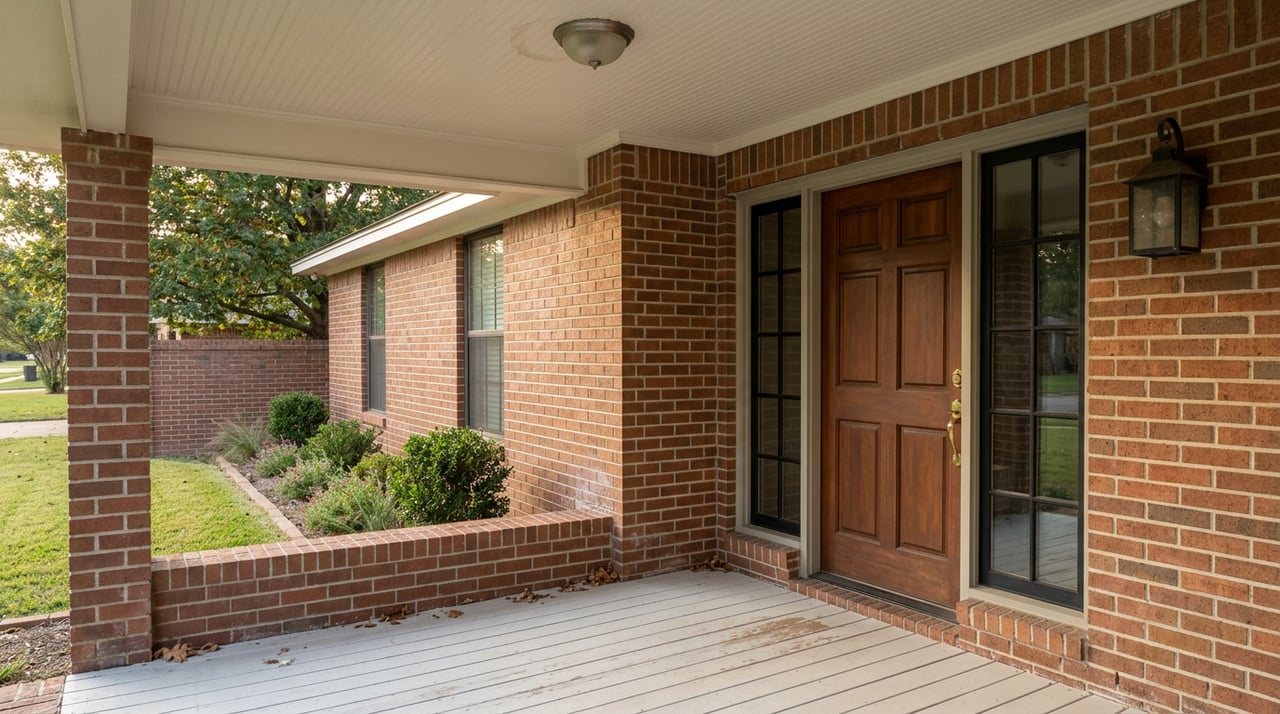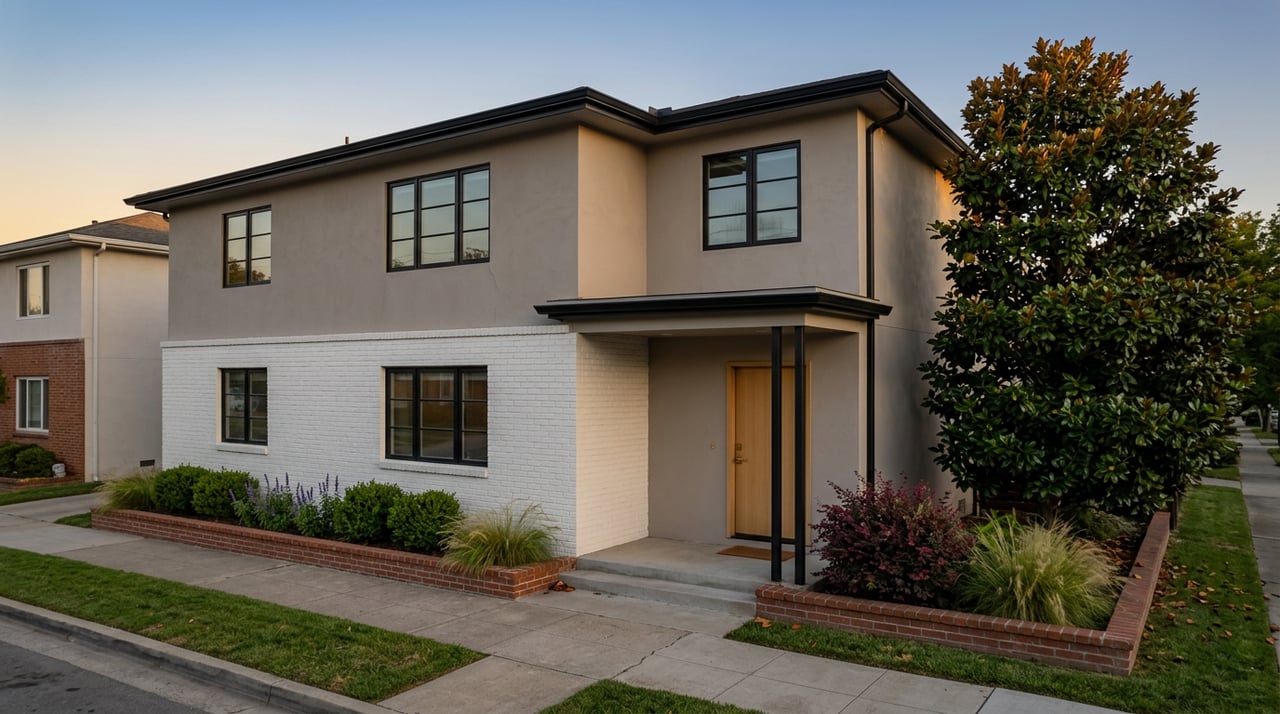
Walk the brick streets of Greenland Hills on the night of October 31 and it looks like the neighborhood simply got handed good luck: steep Tudor rooflines catching porch light, kids cutting diagonally across lawns because the next house is only forty feet away, candy bowls emptying by 7:30 because so many doors are within reach of so many other doors. It reads like charm. It is actually math, and the math was set before anyone in the neighborhood today was born.
The M Streets, officially Greenland Hills, did not become one of Dallas's best trick-or-treating walks by accident of pretty houses. It became that way because of a 1923 platting decision that nobody who walks it tonight will ever see, protected since 2002 by a rule most residents think is about architecture and is actually about density.
The Parade That Starts Before the Candy Does
Halloween in this neighborhood has an organized front half most visitors never notice. The Greenland Hills Neighborhood Association runs an annual Halloween Parade and Spooky Pit Stop, staged with music, yard games, hot and cold drinks, and a DIY photo booth before the parade kicks off at 6 p.m. and marches up Glencoe Street to McCommas Boulevard, historically led by the neighborhood's off-duty patrol officer. Kids peel off the route as they hit candy, then loop back to the Pit Stop for more.
The staging point is not incidental. Glencoe Park is a 14.1-acre neighborhood park established in 1944, with a playground, tennis courts, ball fields, and enough open lawn to hold a crowd before it scatters into the surrounding blocks. It sits inside the neighborhood rather than at its edge, which is exactly why it works as a launch point. A parade route only functions if the park anchoring it is a five-minute walk from most of the houses it's supposed to feed into, and in the M Streets, it is.
None of that is written down as a real estate feature. It is stitched into how the evening actually runs.
The House Everyone Already Detours For
Ask a longtime resident which corner to build the route around and most will say Merrimac. The house at 5415 Merrimac Avenue has become a fixture precisely because it never repeats itself. Owned by a local couple who love music, the display changes theme every year, referencing whatever's dominating pop culture that season. Last year's tableau nodded to Taylor Swift and Duran Duran, with a full "Murder on the Dance Floor" scene built into the yard. Nobody in the neighborhood needs directions to find it. It has become one of the fixed points people build a walking route around, the same way a familiar restaurant anchors a night out even when the rest of the plan is loose.
But the neighborhood also has a limit, and the limit has a name: Steven Novak, a former M Streets resident whose front yard went viral for a wood-chipper effect spraying fake blood across his lawn. Neighbors called the police. News crews showed up. Novak eventually left the neighborhood, saying he didn't want to keep pushing the people around him past what they'd sign up for.
That's a useful data point, not just a fun one. A neighborhood that tolerates an annually-reinvented pop culture tableau on Merrimac but not a gore installation two blocks over is telling you something about its register. The M Streets wants spectacle. It doesn't want to be unrecognizable from itself. That distinction matters more than it sounds, because it's the same instinct that shows up in how the neighborhood treats its actual buildings.
What the Conservation District Is Actually Protecting
The story usually told about Greenland Hills starts with Tudor Revival architecture, and it's not wrong, just incomplete. In 1923, brothers Fletcher and Frank McNeny bought 98 acres of what had been the Bennett dairy farm on the edge of Dallas, near the end of the trolley line at Mockingbird. What made their approach unusual for the time wasn't the housing style. It was the sequencing. Rather than building large showcase homes first and filling in cheaper lots later, the McNenys platted, subdivided, and laid out the infrastructure all at once, running sewer, water, and gas mains as they built, paving streets and sidewalks from the start, and bringing in the trolley and the Sherman-Denison Interurban before the neighborhood had fully filled in. Their marketing newsletter was called "The 60 Footer," a direct reference to the standard lot width they were selling.
That's the detail that gets skipped in most retellings: sidewalks and consistent, narrow lots were baked into the neighborhood's design before a single Tudor gable went up. The architectural character came later, in the building boom of the following decade.
By the early 2000s, residents formalized what they were protecting. A neighborhood survey found that roughly two-thirds of the homes were Tudor style, and on November 13, 2002, Greenland Hills became the ninth conservation district in Dallas, covering six original architectural styles: Craftsman, Spanish Eclectic, Neo-Colonial, Minimal Traditional, Ranch, and Tudor Revival, with Contemporary additions addressed separately. The conservation district's stated purpose is about exterior character, remodeling rules, and new construction guidelines. What it enforces on the ground is continuity of scale. A conservation district can't force a developer to keep a 60-foot lot, but it makes tearing down two houses to build one wider one a much harder path than it would be a few miles away in a neighborhood without that designation.
Why the Math Still Works on Halloween Night
Put those two facts together and the neighborhood's reputation as a trick-or-treating destination stops looking like a coincidence. Narrow, consistent lots plus sidewalks that were part of the original build, not an afterthought retrofitted decades later, means more front doors per block walked than you'll find in neighborhoods platted around wider lots or car-first street design. The conservation district, whatever its stated intent, has spent over two decades keeping that density pattern from eroding one teardown at a time. Every kid who fills a candy bag in under an hour on Merrimac or McCommas is benefiting from a zoning decision made a century before Halloween became the occasion it is here.
That's also why the GHNA's own parade route makes sense on paper before it makes sense as a party. Glencoe Park sits inside a walkable grid, not at the edge of one, so a 6 p.m. parade can realistically loop kids back to a Spooky Pit Stop instead of stranding them somewhere they need a car to leave. The neighborhood's Halloween culture didn't invent the density. It's using infrastructure that was already there.
What This Means If You Live Here
None of this changes what October 31 looks like this year. The parade will still stage at Glencoe Park. Merrimac will still have something new to look at. The brick streets and steep Tudor rooflines will still make the whole thing photograph better than most trick-or-treating anywhere else in the city.
What it should change is how residents talk about why the neighborhood works. The next time someone credits the M Streets' Halloween reputation entirely to charming old houses, it's worth pointing out that the charm was the second decision, not the first. The first decision was a couple of developers in 1923 choosing to lay sidewalks and narrow lots down before they built a single home, and a group of neighbors eighty years later choosing to keep it that way.
If you're weighing a move into a neighborhood like this one, or you already live here and are thinking about how a renovation or addition interacts with the conservation district's rules, that's exactly the kind of local groundwork Lardner Group spends its time on. We work across central Dallas's older, walkable neighborhoods every day, and we know the difference between a house that photographs well and a block that was actually built to be walked. Schedule a consultation if you want to talk through what that distinction means for your own address.