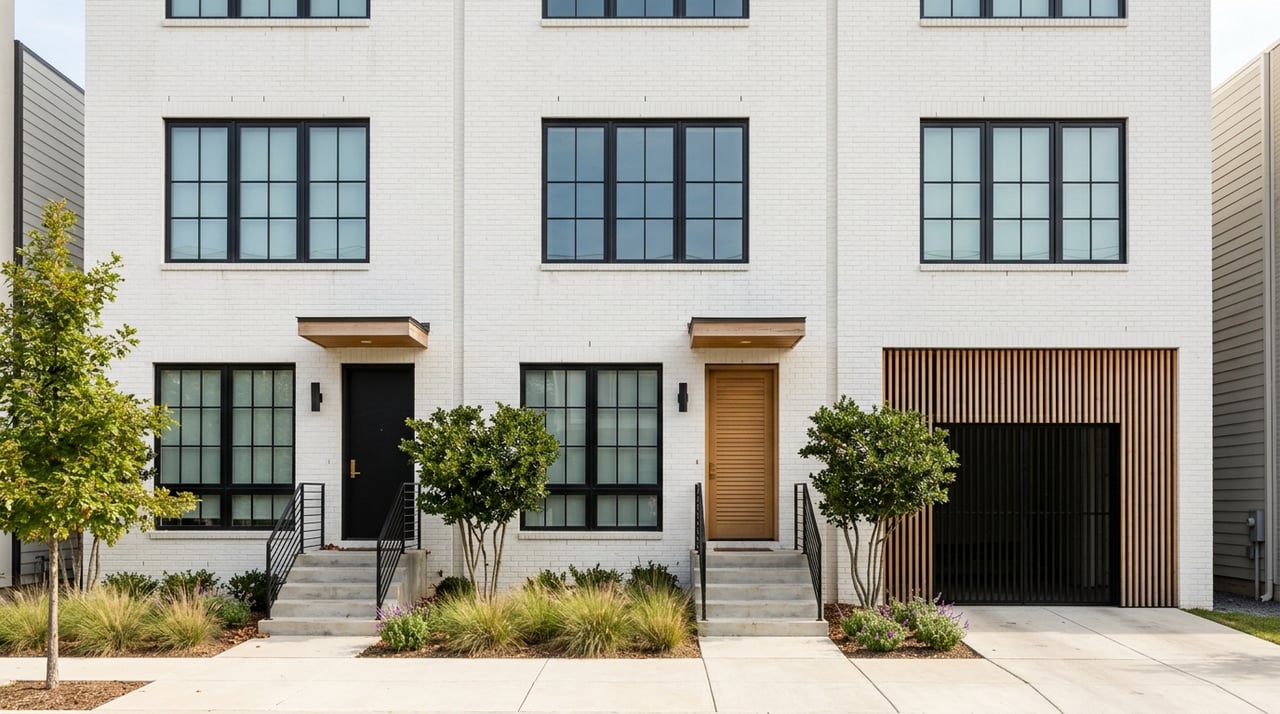
Are you trying to figure out what actually makes sense to build, buy, market, or hold in East Village Dallas right now? That question matters more than ever in a neighborhood where transit access, zoning, parking rules, and pricing all shape what will truly fit the market. If you want a clearer read on where townhomes work, where multifamily makes more sense, and how East Village is evolving, this guide will help you cut through the noise. Let’s dive in.
Why East Village Needs Precision
East Village is not a blank-slate growth story. In East Dallas, the City of Dallas describes a largely residential area with higher-density commercial activity concentrated along the North Central Expressway corridor, which means new product has to respond to an existing neighborhood pattern rather than ignore it.
That matters because product mix in this part of Dallas is really a question of fit. You are not just choosing between townhomes and apartments. You are balancing walkability, access, density, parking, and neighborhood sensitivity on a site-by-site basis.
East Village Is Growing Around Transit
A major catalyst for the area is The Central, a 27-acre mixed-use project on the East Village and Uptown edge with about 2,000 planned residential units. Its first residential phase, The Oliver, brought 351 apartment units into the market and helped signal the kind of design-forward, transit-oriented housing this area can support.
Cityplace/Uptown Station also plays a big role in the East Village story. Located at Haskell Avenue and North Central Expressway, it serves the Blue, Orange, and Red Lines, which reinforces the value of walkable, transit-connected product in and around the neighborhood.
What Current Market Data Suggests
The broader Dallas-Fort Worth multifamily market has been absorbing a large amount of supply while showing signs of stabilization. Northmarq reported more than 10,000 units absorbed in the first quarter of 2025, with vacancy falling to 6.5%, while CBRE reported Dallas occupancy at 93.9% in the third quarter of 2025 and average rent at $1,541 per unit.
In East Dallas, pricing tells a more nuanced story. Realtor.com described East Dallas as a buyer’s market in 2026, with about 634 homes for sale, a median list price of $650,000, and median days on market of 45, while median rent was reported around $1,830 to $1,902 depending on the update.
That combination points to a market with pricing power, but also with limits. You can still target premium positioning, but the product has to feel intentional and well matched to the location.
Townhomes Still Work, But Selectively
Townhomes remain a strong format in East Dallas, especially when the goal is privacy, direct entry, and more house-like living. Current rental examples show the premium clearly, including Townhomes on Bennett at $3,100 or more per month for a two-bedroom layout of about 1,550 square feet and Moser Homes at $4,571 per month for a three-bedroom plan of about 2,540 square feet.
Those numbers suggest renters and buyers are paying for a specific lifestyle, not just square footage. Features like private yards, rooftop decks, and direct-entry layouts continue to matter because they create separation from conventional apartment living.
Still, townhomes are structurally lower density. Dallas TH-3(A) standards show 12 dwelling units per acre with a 36-foot height limit, and single-family, duplex, and townhome properties in R, D, and TH districts still require one parking space per dwelling unit.
That means townhomes should usually be reserved for the pockets of East Village that can support a premium price point and where a lower-density format fits the site. If the land basis is too high or the site has stronger multifamily potential, townhomes can quickly become the less efficient choice.
Multifamily Has the Stronger Land-Efficiency Case
If a site can truly function as multifamily, the density difference is significant. MF-3(A) zoning allows up to 90 dwelling units per net acre, a 90-foot height limit, and a 2.0 floor-area ratio, which is a very different equation from townhouse zoning.
That land-efficiency gap is one reason compact, amenity-rich multifamily often makes the most sense near East Village transit access. The current market appears to reward well-finished units with strong common spaces, convenient layouts, and a pedestrian-friendly location more than oversized unit counts alone.
The Oliver is a useful local example of what premium multifamily looks like in this setting. It offers studios, one-bedroom, and two-bedroom floor plans from 585 to 1,830 square feet, with finishes and amenities such as quartz countertops, built-in speakers, private terraces, coworking space, pet amenities, a pool lounge, and fitness spaces with yoga and Pilates studios.
The Best Apartment Mix Looks Practical
For most East Village multifamily projects, a one-bedroom and two-bedroom-heavy mix appears to be the most defensible read. That aligns with current product in the market, transit-oriented living patterns, and renter demand for convenient, well-located homes that do not require a detached-house footprint.
Studios can also make sense, especially closer to transit. The Oliver includes studios, and East Village-adjacent planning has also included a micro-apartment concept through Bloc House along the Santa Fe Trail.
That does not mean every site should chase the smallest possible unit mix. It means compact units work best when the location, finish level, and shared amenities are strong enough to make the overall living experience feel elevated and efficient.
Finish Level Matters More Than Pure Size
East Village appears to reward design that feels better than standard commodity Class A product. Current examples point toward quartz surfaces, smart or integrated appliances, coworking areas, pet amenities, terraces, rooftop decks, and some form of private outdoor space.
In practical terms, that means you do not necessarily need ultra-luxury everything in every square foot. You do need a finish package and resident experience that feels intentional, polished, and connected to how people live in an urban Dallas neighborhood today.
For townhomes, the emphasis shifts slightly. Buyers and renters at those price points are often looking for direct-entry living, parking convenience, privacy, and outdoor space that makes the home feel more individual.
Parking Can Change the Equation
One of the biggest recent shifts in Dallas planning is parking reform adopted on May 14, 2025. Within one-half mile of light rail and streetcar stations, parking minimums were removed for any use, and multifamily minimums now scale from no minimum for 0 to 20 units, to 0.5 spaces per unit for 21 to 199 units, and 1.0 space per unit for 200 or more units.
That is especially relevant in East Village because of the proximity to Cityplace/Uptown Station. A site-specific half-mile measurement still needs to be confirmed, but in the right location, transit access can materially improve the feasibility of multifamily by reducing the parking burden.
Townhomes do not benefit in the same way if they remain in R, D, or TH zoning. Those districts still require one parking space per dwelling unit, so parking efficiency tends to favor multifamily more strongly on transit-adjacent sites.
Site Planning Should Stay Pedestrian First
ForwardDallas 2.0 and related city planning materials emphasize corridors, transit, walkable mixed-use areas, wider sidewalks, neighborhood-scale open spaces, and pedestrian-oriented design. That planning direction lines up well with what East Village is already becoming.
It also fits the local context in East Dallas, where residents historically opposed street widenings. In simple terms, product that depends on heavy curb cuts, auto-dominant circulation, or oversized parking fields is less aligned with how this area has evolved.
A better fit is often a plan that keeps circulation efficient, limits curb interruptions, and supports a stronger sidewalk experience. In East Village, good product mix is not just about unit count. It is also about how the building meets the street.
Mixed-Income Options Can Be Strategic
For some multifamily or mixed-use sites, Dallas offers another lever through the Mixed-Income Housing Development Bonus program. In eligible MF and MU districts, the program can provide added development rights such as height, floor-area ratio, density, and reduced parking minimums in exchange for affordable units or a fee in lieu.
That can be meaningful when a site needs more units or a better parking ratio to make the numbers work. In East Village, where entitlement and land efficiency can make or break a project, that kind of flexibility may influence the final product mix.
A Realistic East Village Product-Mix Read
Today, the clearest read for East Village Dallas is this: multifamily should do most of the heavy lifting where transit access is strong, while townhomes should be more selective and tied to sites that can justify direct-entry living and higher price points.
A practical mix often looks like this:
- Apartments: one-bedroom and two-bedroom-heavy
- Studios or micro units: selective, especially near transit
- Townhomes: limited and premium, with garages, privacy, and outdoor space
- Amenity strategy: design-forward finishes and useful shared spaces rather than generic excess
For-sale townhomes may still perform, but careful pricing matters in a buyer-friendly East Dallas market with median marketing time around 45 days and sale-to-list ratios around 96% to 97%. In other words, the strongest projects will likely be the ones that are clearly differentiated by location, design, parking, or layout.
What This Means If You Are Making a Decision
If you are evaluating East Village as a buyer, seller, owner, or developer, product mix is not an abstract planning concept. It directly shapes value, leasing velocity, marketability, and long-term hold performance.
The good news is that East Village offers real opportunity. The challenge is that success here usually comes from matching the product to the block, the zoning, the transit context, and the actual price sensitivity of the market.
That is where local, block-by-block judgment matters. If you want a thoughtful strategy for East Village townhomes, small multifamily, land positioning, project marketing, or boutique leasing and management, Lardner Group can help you plan the right next move.
FAQs
What product mix works best in East Village Dallas today?
- In general, compact multifamily near transit appears to have the strongest fit, with one-bedroom and two-bedroom-heavy apartment mixes leading the way and townhomes working best on selective premium sites.
Why are townhomes in East Dallas priced at a premium?
- Current examples suggest the market pays more for privacy, direct entry, rooftop decks, private yards, garages, and a more house-like living experience than standard apartment product offers.
How does Dallas parking reform affect East Village development?
- Within one-half mile of light rail and streetcar stations, parking minimums were removed for uses citywide, and multifamily requirements were reduced based on project size, which can materially improve feasibility near Cityplace/Uptown Station.
Are studios or micro units a fit for East Village Dallas?
- They can be, especially near transit, as shown by current premium studio product and recent planning for micro-apartments in the broader East Village area.
What should buyers and sellers know about East Dallas townhome pricing?
- East Dallas remains a buyer-friendly market based on the research provided, so townhome pricing should be careful and realistic unless the property offers a clearly differentiated location, design, parking setup, or layout.
How can mixed-income incentives affect East Village multifamily planning?
- In eligible Dallas MF and MU districts, the Mixed-Income Housing Development Bonus program can offer added height, density, floor-area ratio, and reduced parking minimums, which may help improve a project’s final unit mix and feasibility.